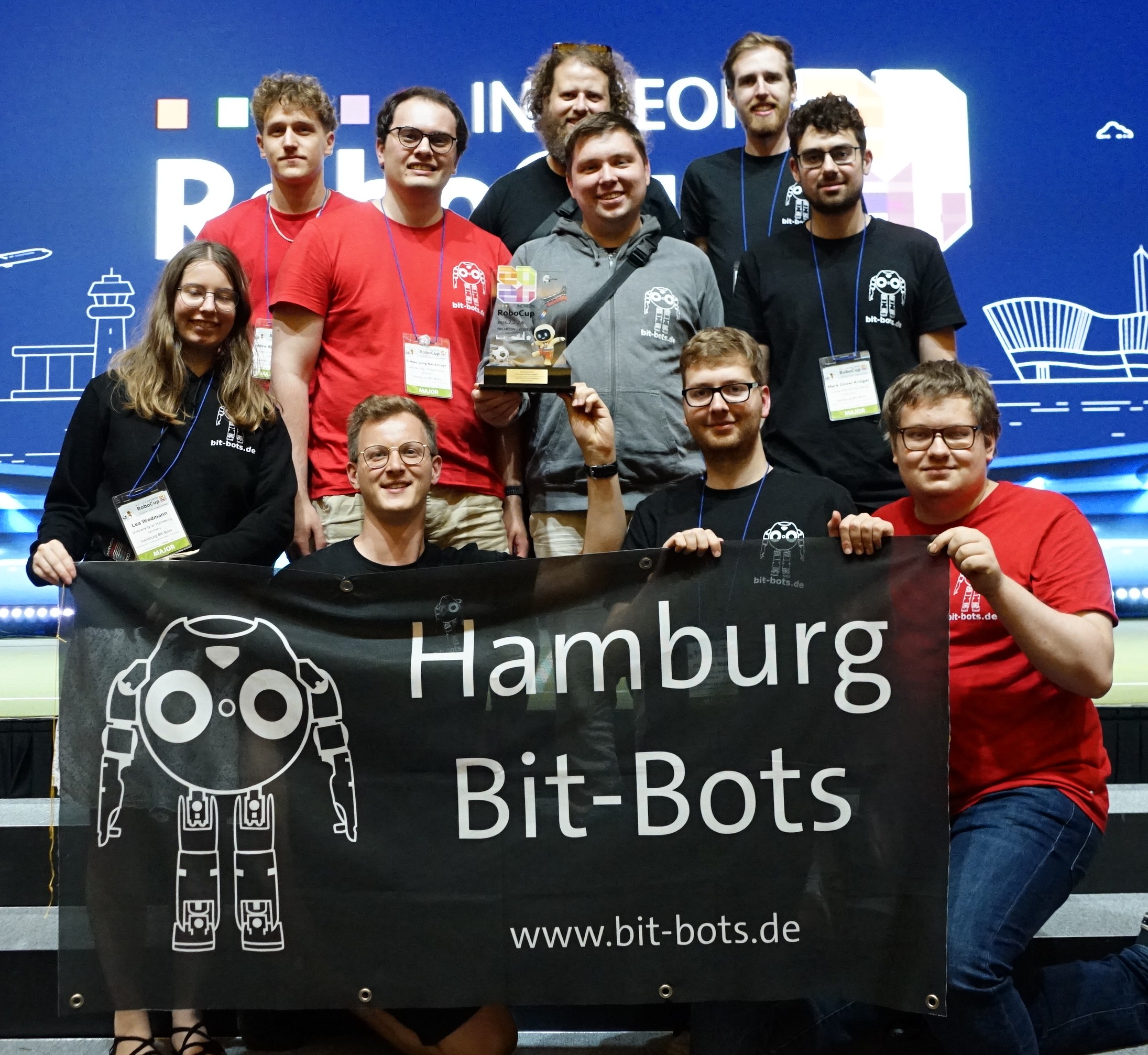
The Bit-Bots secured second place in the Small Size Division of the Humanoid Soccer League at RoboCup 2026! This marks the best international result in the history of our research group. From June 30, 2026, through July 5, 2026, we gave it our all to achieve this goal.
A Rocky Start
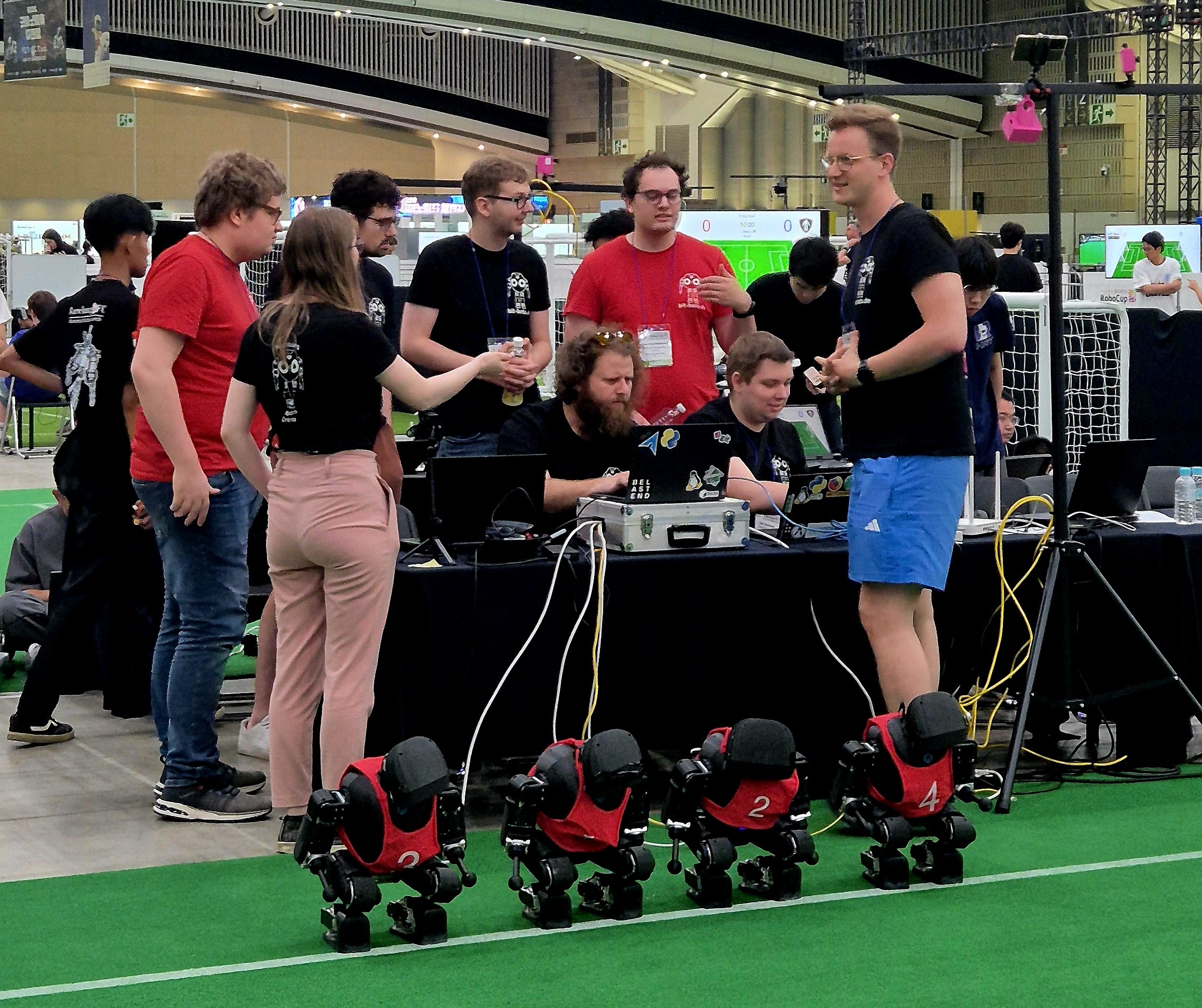
The competition got off to a rocky start, however. First, one of our flights was canceled, which meant we didn’t arrive in Incheon until a day later. That very day, was already the first of two setup days during which the robots could be adapted to the new playing field—time that we would, of course, have liked to make full use of.
The second setback came immediately after our arrival at the convention center: Four teams had arrived with robot models that were significantly more powerful than the ones they had originally registered. This significantly reduced our chances of winning the overall title. However, instead of letting this discourage us, the situation motivated us even more.
Software Under Time Pressure
At the start of the competition, there were several technical issues that we had to resolve on short notice.
During the four months we had the new Mini Pi plus robot at our disposal, we had already adapted large parts of the software. Among other things, we retrained it to walk and stand up. However, one important ability was still missing: a working kick.
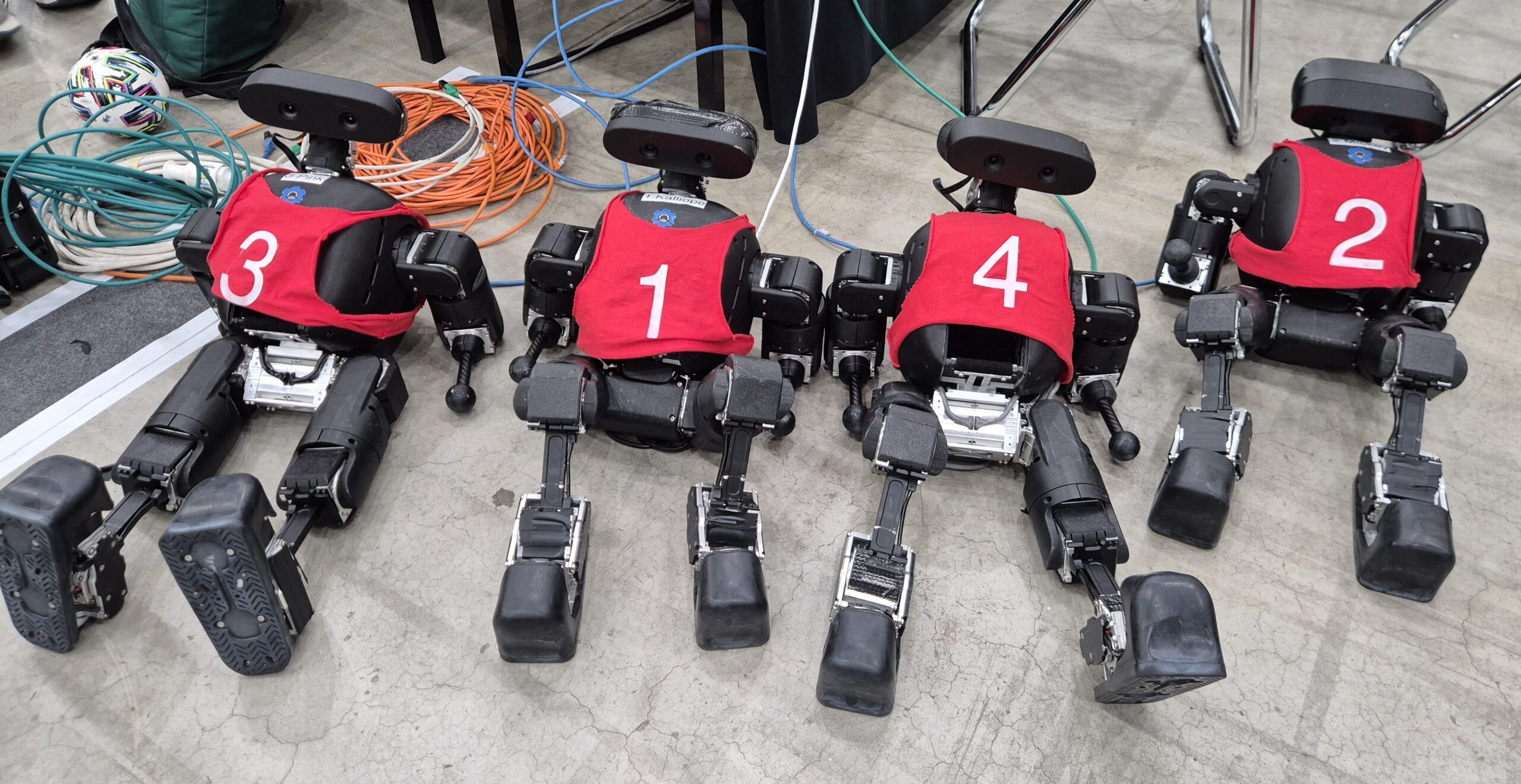
Luckily for us, High Torque, the manufacturer and sponsor of our robot, provided us with a working kick mechanism just one day before we left. However, we first had to integrate it into our software – a task that was much more time-consuming than it initially sounds. After a few days of intensive work, the kick was finally ready for the game and helped us score several important goals in the tournament.
When Your Own Foot Becomes the Ball
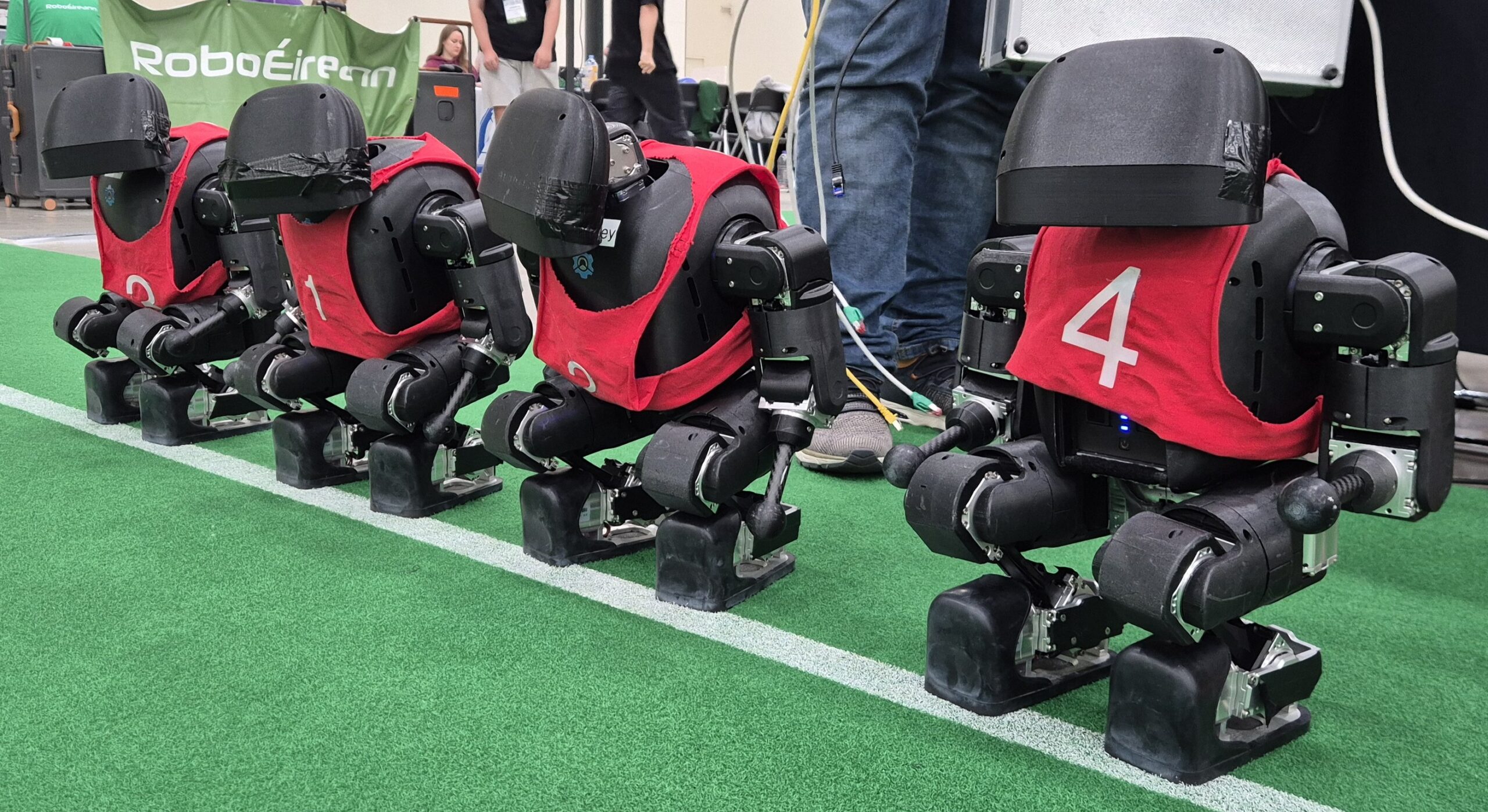
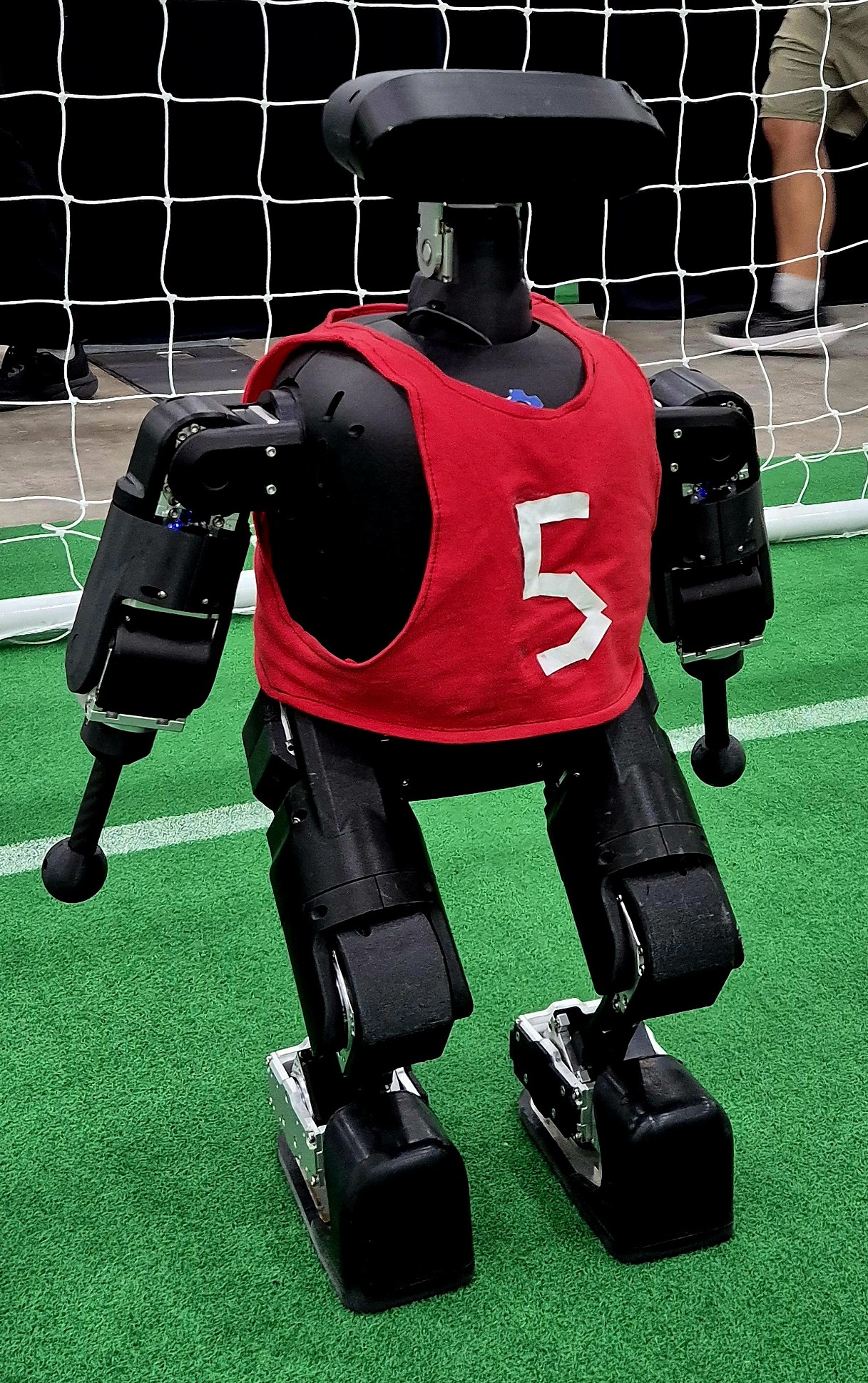
Another problem concerned our image recognition system. Time and again, it mistakenly identified the feet of our own robots as balls. In the camera images, the silver metal on the feet actually looked deceptively like a soccer ball. As a result, the team’s behavior was no longer reliable, and a quick solution was urgently needed.
As a short-term measure, we covered the robots’ feet with black duct tape, which significantly reduced the misclassifications. In addition, we captured new training images that specifically included these error scenarios and retrained our neural network. Furthermore, we switched to an improved model for image recognition. Through this combination, we were able to completely resolve the problem.
Improvements to Team Behavior
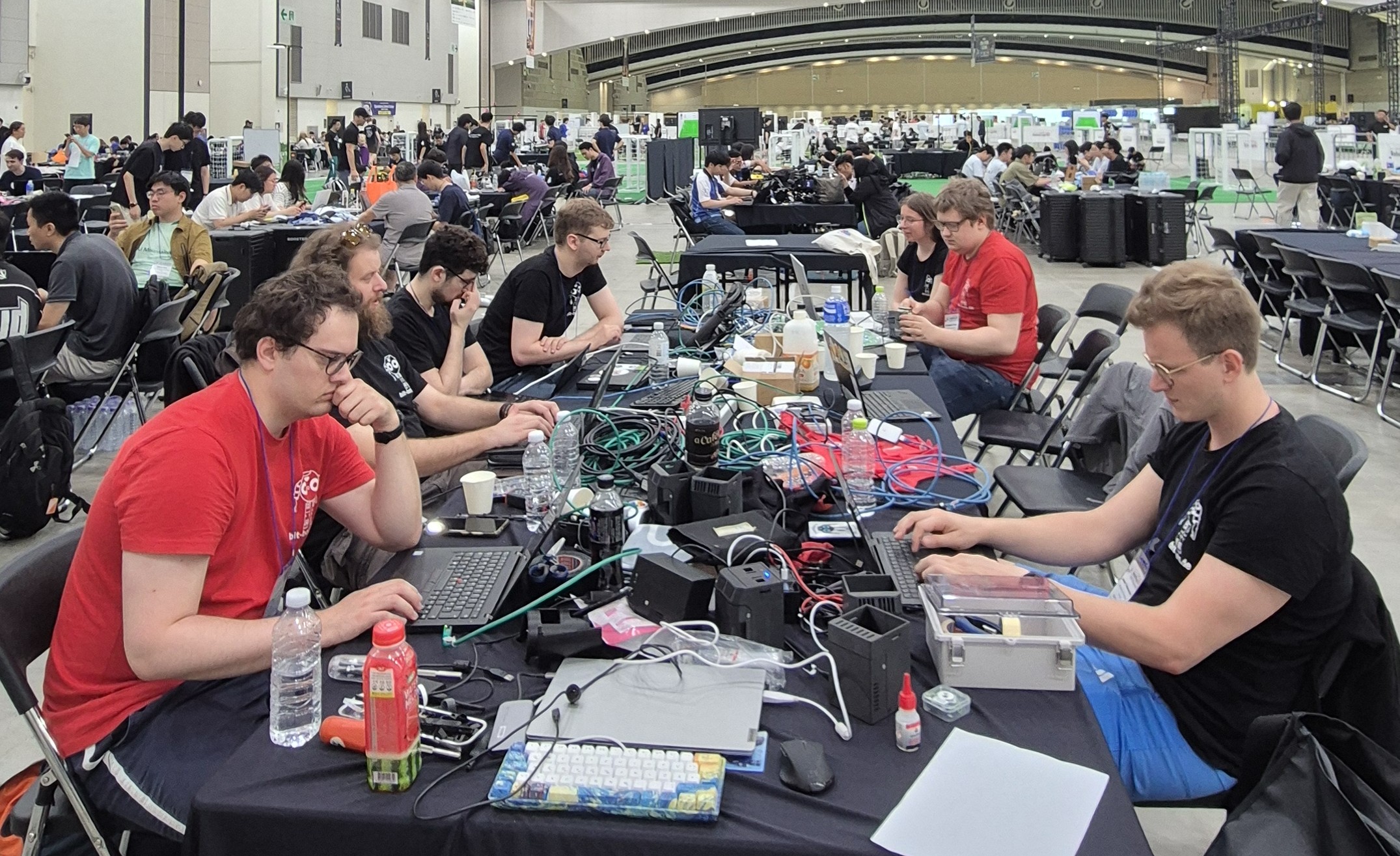
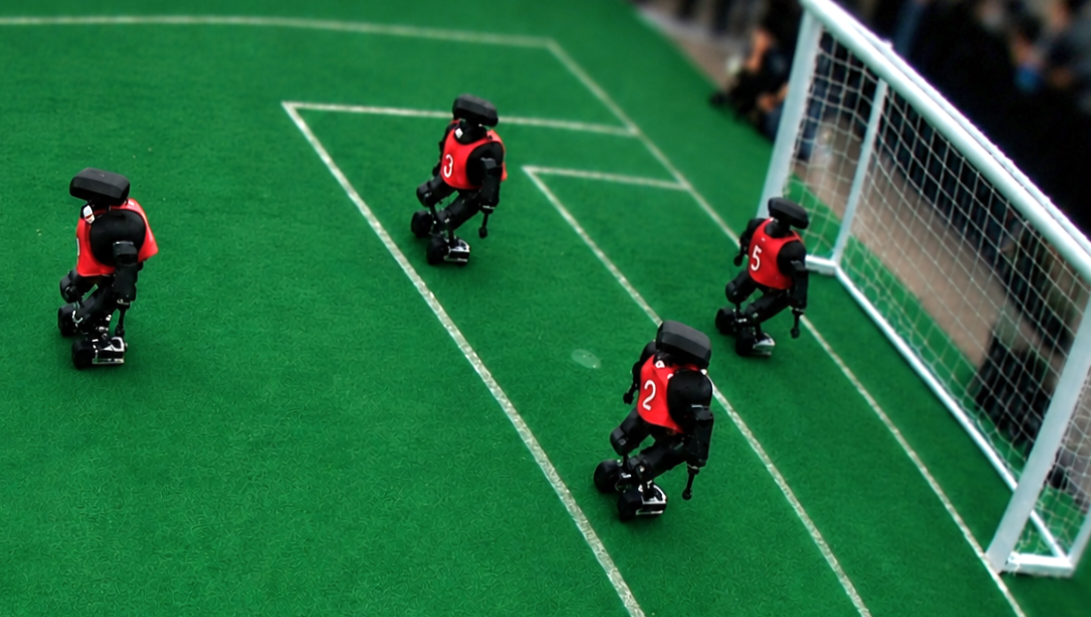
Our gameplay also received a major update during the World Championship. We completely rewrote the logic for robot positioning and fixed several bugs.
This was made possible by a simulation setup that allowed us to test the interaction of four robots on a single computer. This setup was continuously improved throughout the World Championship and ultimately proved to be a decisive factor in our strong finish.
Many Small Improvements
In addition to the three major software projects—the kick, image recognition, and the new positioning logic—we worked on numerous other improvements. Among other things, we optimized our whistle detection, tested faster stand-up times and higher running speeds (including running without ground contact) during gameplay, and further developed the inverse kinematics for the robot’s head.
Of course, in between all that, there were always games on the schedule that needed to be prepared for. Additionally, we also took on refereeing duties for matches involving other teams.
Eight matches, six wins
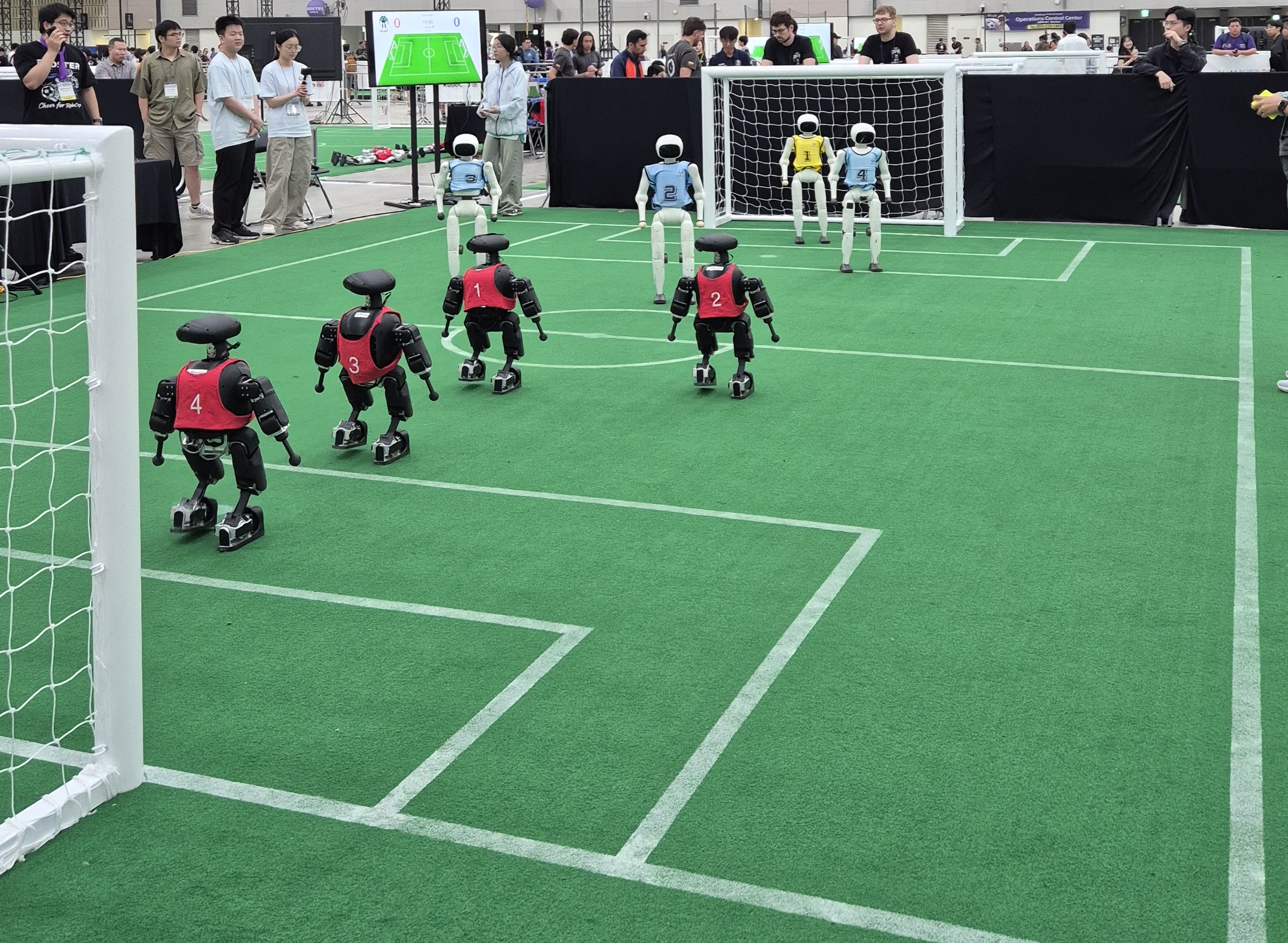
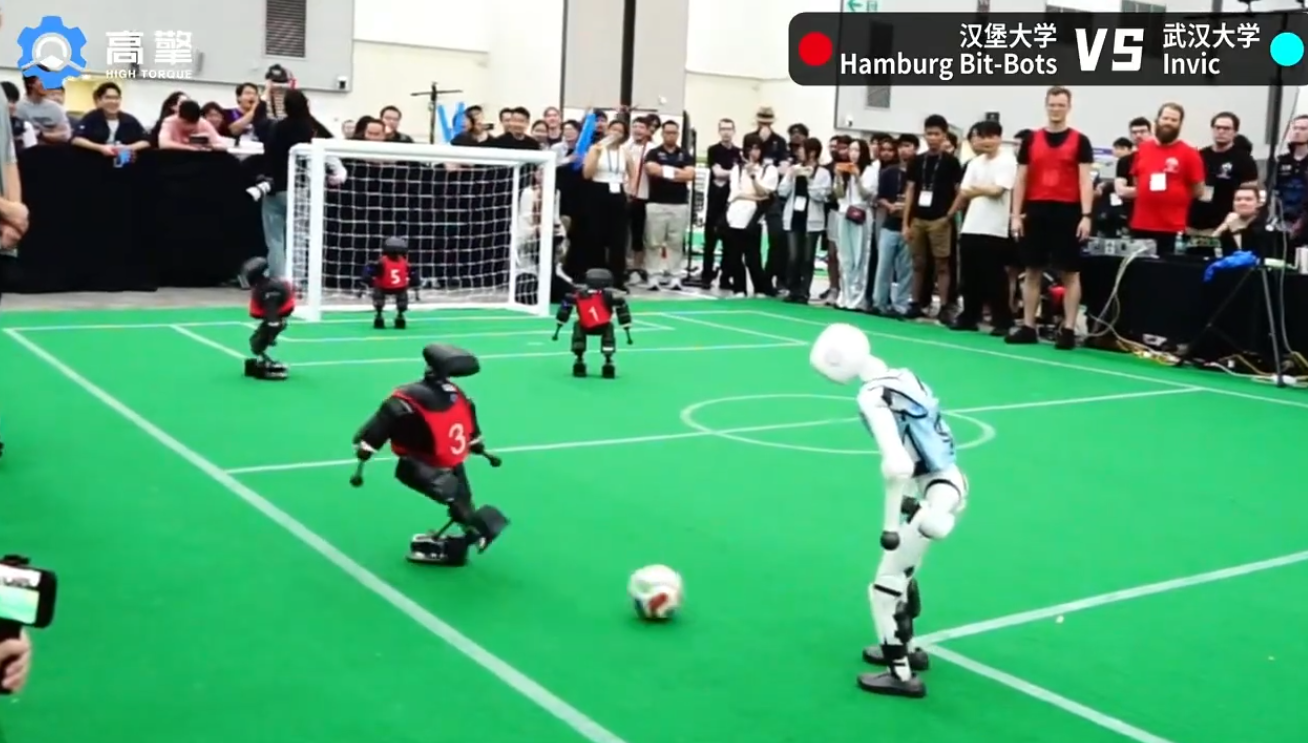
During the tournament, we played a total of eight games, winning six of them and scoring a total of 20 goals.
As expected, the teams with the more powerful robot models proved to be our toughest opponents. We managed to win two matches against this robot model, but we also suffered two losses—including, unfortunately, a 6:3 defeat in the final against Team Invic from Wuhan University.
Final livestreams:
- Official livestream (embeded above)
- HSL league field livestream
Nevertheless, we are very satisfied with our performance. At the same time, we see a few areas that we would like to continue improving before the next World Cup.
More Than Just a Trophy
Second place wasn’t the only success of this trip.
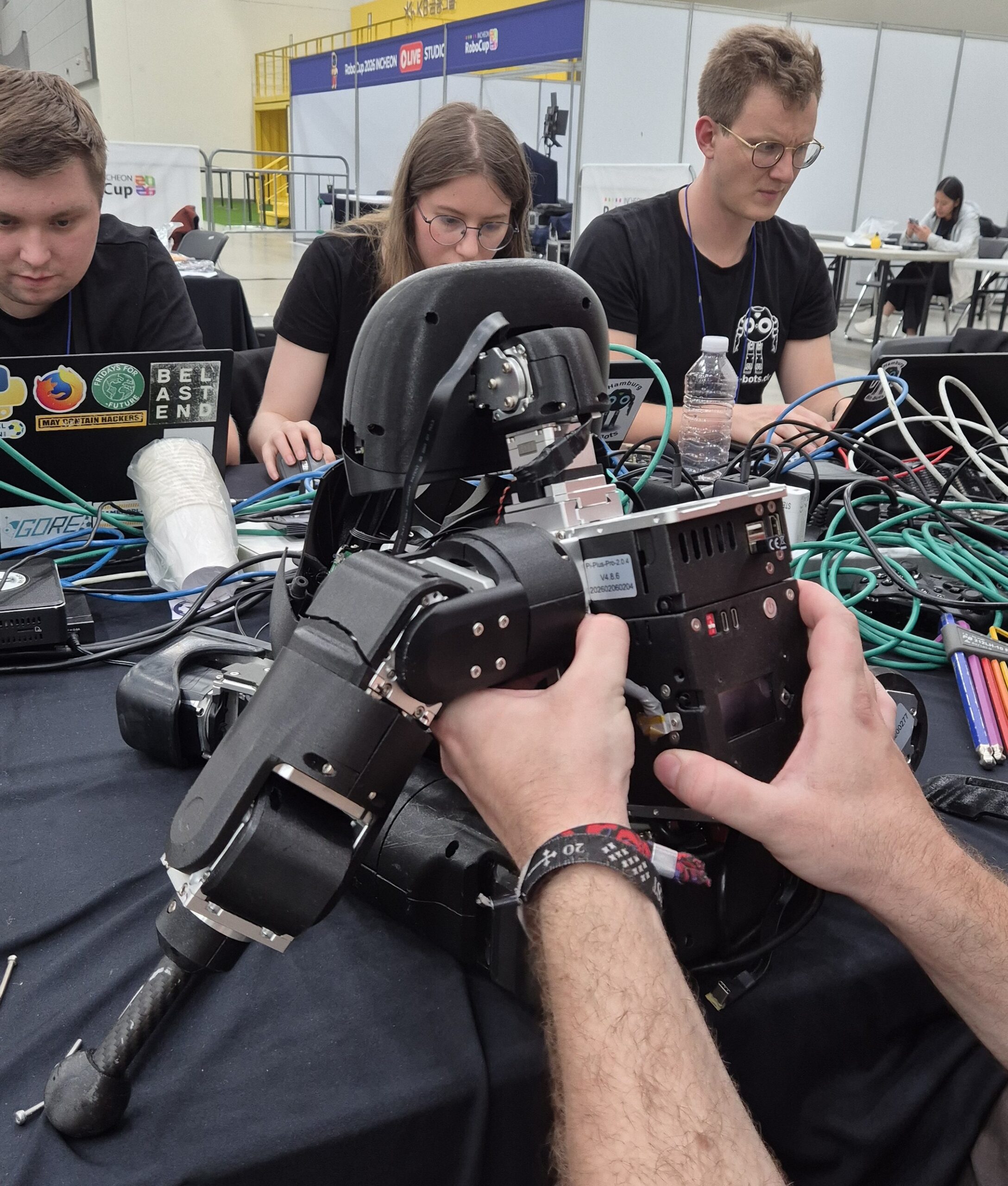
The robots we used to compete in the RoboCup had initially been loaned to us only until the end of the World Cup. However, our goal was to be able to continue working with them even after that. To do so, we had to show our partner, High Torque, that we could develop high-performance software – and that’s exactly what we accomplished.
We were also particularly pleased with the personal interaction we had with the High Torque staff. They actively supported us during the competition, for example when a camera cable malfunctioned or adjustments had to be made to the battery settings.
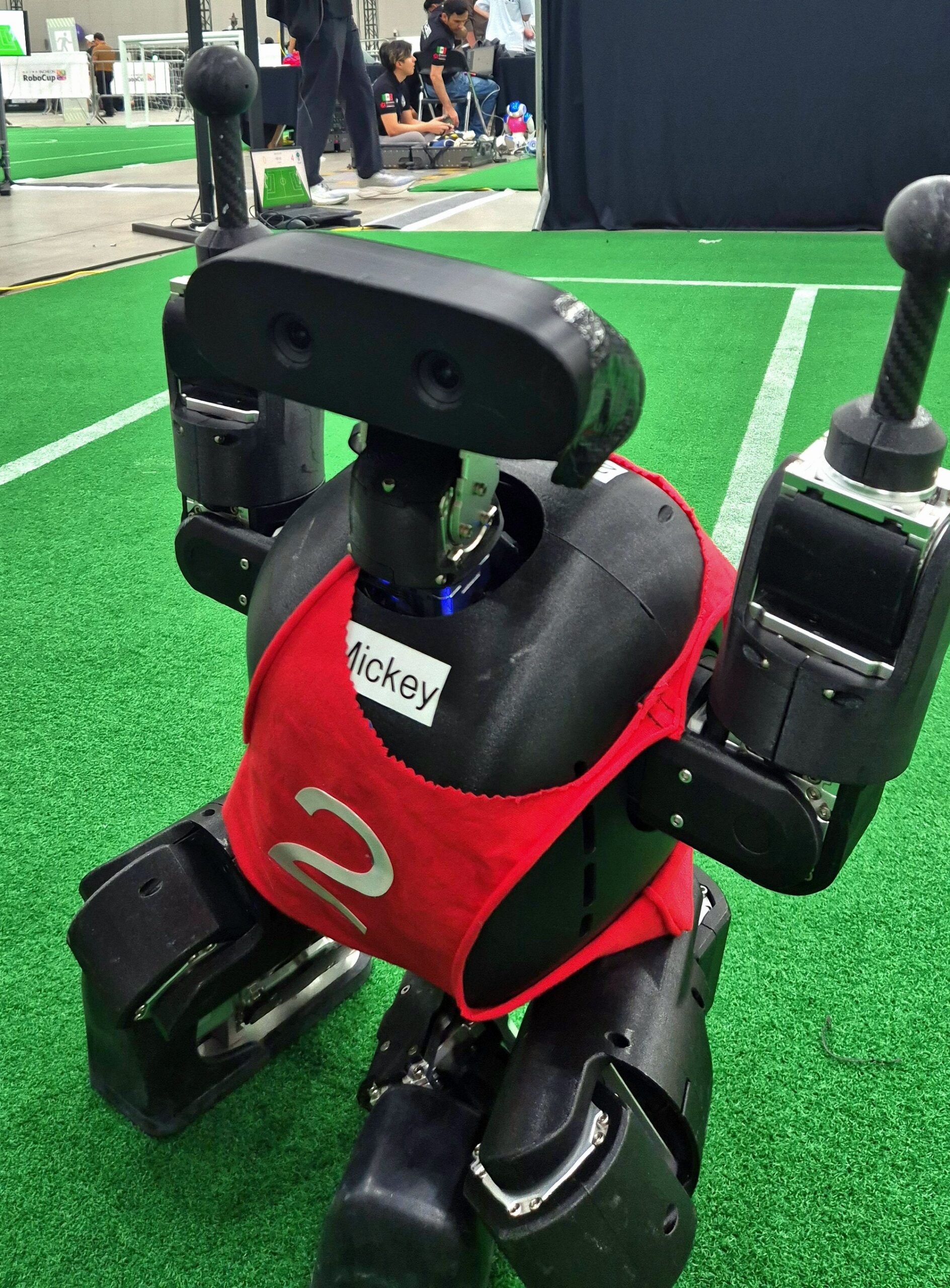
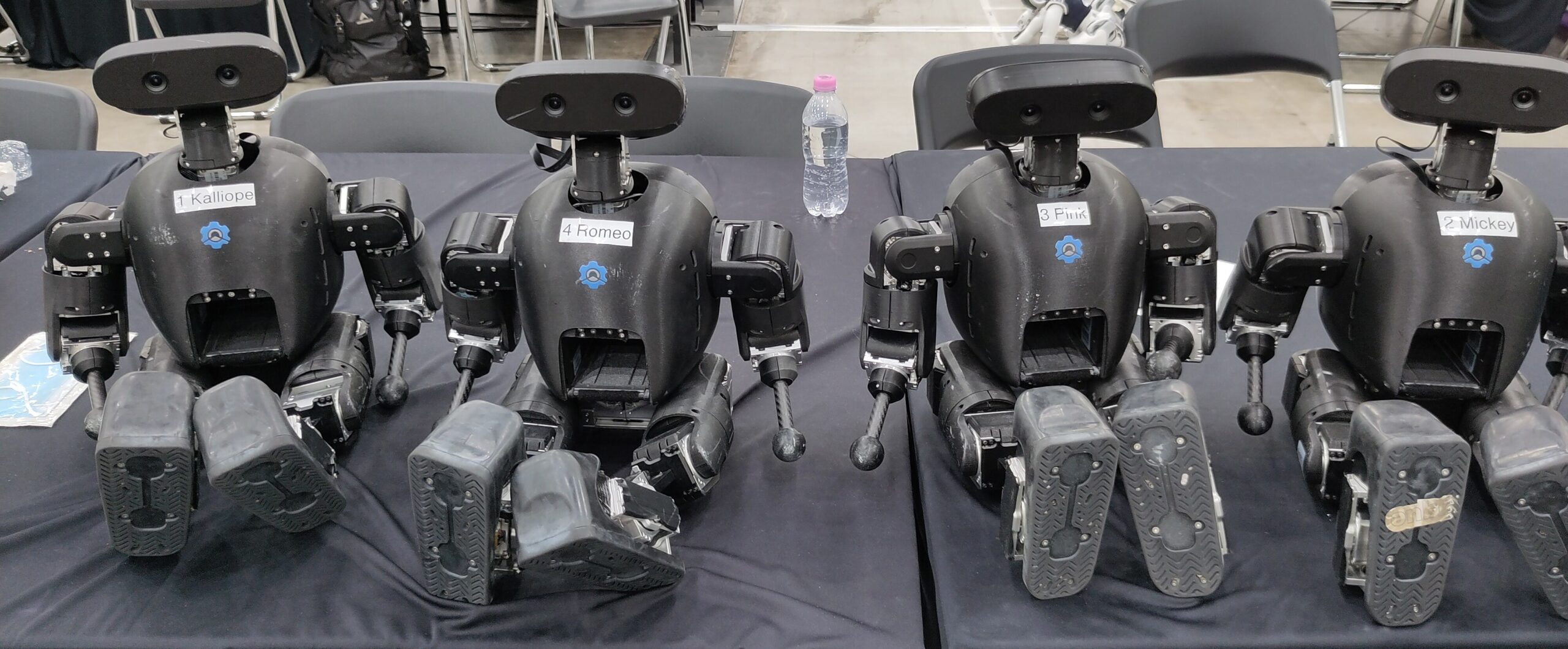
In the end, High Torque and we jointly decided to continue our partnership. As a result, we were able to take seven brand-new robots home with us. Unfortunately, we had to leave the four robots we’d used to secure second place behind in Incheon.
Conclusion
RoboCup 2026 in Incheon was an extraordinary experience for us. We are proud of our performance, of everything we were able to achieve technically during the competition, and, of course, of our second-place finish.
Now we’re already looking forward to the next World Cup, which will take place in Nuremberg in 2027.